Best Padel Rackets for Tennis Players UK 2026: 7 Compared for Crossover
Tennis player turned padel convert, tracking the UK padel boom from inside it.
I earn a small commission from purchases through affiliate links in this article. This helps keep RacketRise free and costs you nothing extra.
Last Updated: May 2026
Free Download
UK Padel Gear Checklist
What to buy, what to skip, and where to get the best UK prices — in one printable page.
Plus the weekly newsletter. No spam, unsubscribe anytime.
Quick Summary
Tennis players are the biggest single demographic moving into UK padel — there are roughly 330,000 active UK tennis players and a significant share have tried padel at least once. The good news: your tennis muscle memory is mostly an asset. The bad news: the wrong padel racket will fight every shot you take, and most "padel for beginners" guides assume you've never held a racket before.
Our top pick for UK tennis players: Head Delta Hybrid 2026 at around £170. Familiar Head branding, 365g hybrid shape, 12K carbon surface. Forgiving enough for your first 100 hours of padel; technical enough to keep up when you start playing weekly. Available at Padel Nuestro UK and Amazon UK.
The single biggest mistake tennis players make: buying a teardrop or diamond frame because it "looks more like a real racket." Don't. Get a hybrid or round shape for the first 6-12 months. Your tennis backhand will thank you.
Quick Comparison: 7 Best Padel Rackets for Tennis Players {#quick-comparison}
| Racket | Price | Shape | Weight | Best For | Why It Suits Tennis Players |
|---|---|---|---|---|---|
| Head Delta Hybrid | £170 | Hybrid | 365g | All-round crossover | Familiar Head feel, forgiving sweet spot |
| Bullpadel Indiga CTR | £140 | Hybrid | 360g | Control-focused tennis players | Reduces overhitting tendency |
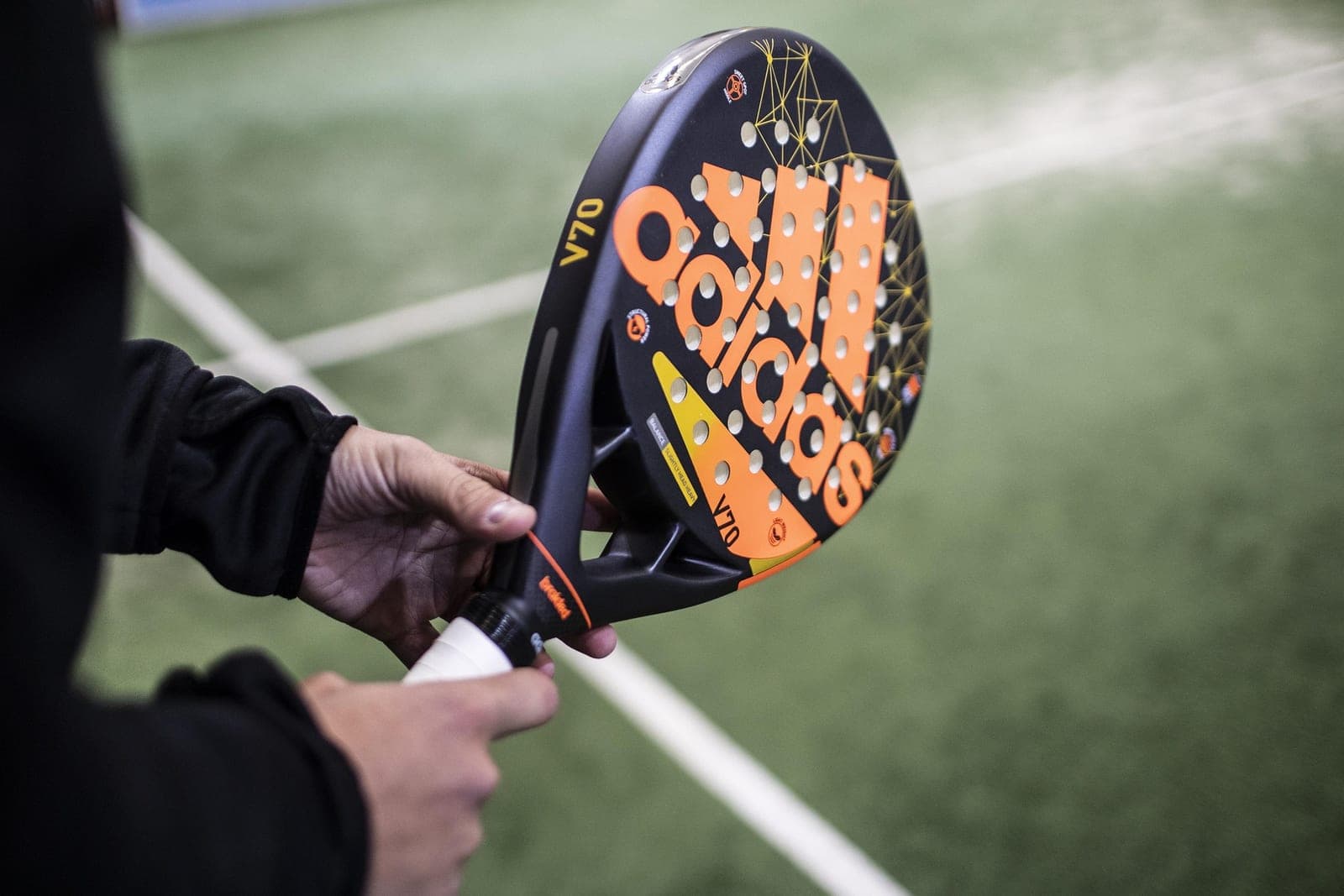
| Adidas Drive Light | £130 | Round | 355g | Lighter tennis frames (women) | Closest swing weight to a tennis racket |
| Nox ML10 Pro Cup | £160 | Hybrid | 365g | Aggressive baseliners | Power feel without going full teardrop |
| Babolat Counter Veron | £180 | Hybrid | 365g | Lifetime Babolat players | Recognisable handle + cosmetics |
| Wilson Carbon Pro | £150 | Round | 360g | Wilson loyalists | Pro Staff-derived weight balance |
| Head Speed Motion | £200 | Hybrid | 370g | Tennis 4.0+ moving fast | Top-tier crossover frame |
What Tennis Players Get Right About Padel {#what-tennis-players-get-right}
Your tennis foundations transfer directly into padel — more than most articles admit.
Forehand technique. A topspin tennis forehand is essentially a padel forehand with a different grip pressure. The kinetic chain (legs → core → arm → wrist) is the same. Tennis 3.5+ forehands hit immediately at competitive UK padel intermediate level.
Eye-hand coordination. Reading pace, anticipating bounce, judging trajectory — none of this is new. The visual processing you developed over years of tennis applies to padel from your first session.
Footwork. Split-step, recovery, lateral movement — all transferable. Padel is smaller and slower than tennis, which means your tennis footwork is over-spec'd in a good way. You'll be in position before most non-tennis padel players have started moving.
Service motion (for understanding). You won't use a tennis serve in padel — the rules require an underarm serve below waist height. But understanding service mechanics (toss, contact point, follow-through) helps you absorb padel's underhand serve quickly. UK padel coaches report tennis-trained players have the cleanest padel serves at the 6-month mark.
Match temperament. The mental side of point construction — when to attack, when to defend, when to neutralise — translates 1:1. Padel rewards patience and shot selection more than tennis does, so if anything tennis players over-attack at first. Easy adjustment.
What Tennis Players Get Wrong About Padel {#what-tennis-players-get-wrong}
The bad news section. Most of these are unlearnable but they take time.
You'll want to drive every ball. Tennis trains you to put the ball away with pace. Padel punishes this — drives come back off the back wall, the rally restarts, and now you're out of position. The single biggest adjustment for tennis players is learning to use the lob and the bandeja (defensive overhead) instead of forcing winners.
Wall reading. The padel walls are the biggest mental adjustment. Tennis players read a ball and prepare for the bounce — they're not used to reading a ball that's going to bounce, hit a wall, and come back. The first 50 hours of padel involve a lot of "I thought that was going out" balls. This is normal.
Underarm serve. Tennis players hate this for the first month. The serve is a non-weapon — it's a way to start the point, not win it. Once you accept this, your padel serve gets clean and consistent fast. Fighting it is the slow path.
Backhand grip. Padel is a continental-grip game — same grip for forehand and backhand, no swap. Tennis players are used to switching to an eastern or semi-western backhand. The continental backhand feels weak at first. Trust it. Three months in, your padel backhand will be one of the most reliable shots in your game because you never had to think about grip changes.
Padel is doubles-default. Most UK padel is doubles. If you're a singles tennis player, the positional thinking is different — you don't cover the whole court, you cover your half. Some tennis players spend the first 20 hours of padel running into their partner.
Free Download
UK Padel Gear Checklist
What to buy, what to skip, and where to get the best UK prices — in one printable page.
Plus the weekly newsletter. No spam, unsubscribe anytime.
Detailed Racket Reviews {#detailed-reviews}
Head Delta Hybrid 2026 {#head-delta-hybrid}
Price: £170 | Shape: Hybrid | Weight: 365g | Balance: Medium
The cleanest crossover frame on the UK market. Head's tennis pedigree means the cosmetics, grip feel, and overall hand-feel are immediately familiar to anyone coming from a Head tennis racket. The Delta Hybrid sits between control and attack — forgiving enough that mishits are still in-court, technical enough to reward clean contact with proper pace.
For tennis players: the medium balance is the key. Tennis players moving to padel often grab teardrop frames thinking they'll get more power; they end up with a sluggish racket on volleys. The Delta Hybrid's medium balance keeps the swing weight close to a tennis racket's feel. Strong stocks at Padel Nuestro UK and Tennis Nuts.
Verdict: the right answer for 80% of UK tennis-to-padel converts.
Bullpadel Indiga CTR
Price: £140 | Shape: Hybrid | Weight: 360g | Balance: Low-medium
Bullpadel's pro-tour pedigree without the demanding spec of their advanced frames. The Indiga CTR is a control-orientated hybrid designed for intermediate players — for tennis crossovers, that translates as "the racket that stops you overhitting."
For tennis players: the slightly lower balance reduces the tendency to drive everything flat. You'll find yourself accidentally hitting better shots than you intended — the racket gently encourages placement over power. Bullpadel's UK distribution runs through Amazon, Padel Reviews, and Padel Pro Shop.
Verdict: ideal if you know you're a hitter and want a frame that nudges you toward smarter padel.
Adidas Drive Light
Price: £130 | Shape: Round | Weight: 355g | Balance: Low
The lightest crossover-friendly option in our list. The Drive Light's round shape gives the biggest sweet spot, and the 355g weight feels closest to a tennis racket's swing weight (despite tennis rackets being heavier in absolute terms — the leverage maths is different).
For tennis players: strongest pick for women coming from tennis, or any tennis player who plays with a 280-290g tennis frame. The round shape forgives the first weeks of off-centre contact. Sports Direct + Amazon UK distribution makes it the easiest to buy quickly.
Verdict: the gentlest entry point — pick this if "the right racket" feels intimidating.
Nox ML10 Pro Cup
Price: £160 | Shape: Hybrid | Weight: 365g | Balance: Medium-high
Nox's intermediate-tier hybrid, sitting one step below their pro-line AT10 frames. For tennis players who hit hard and want to keep hitting hard, the Pro Cup gives them the attacking feel without the demanding wrist technique of a pure teardrop.
For tennis players: the medium-high balance leans this slightly into attacking territory — suits aggressive tennis baseliners better than counter-punchers. UK distribution via Padel Nuestro and Amazon.
Verdict: the pick for tennis players who hit a heavy ball and want to keep that feel in padel.
Babolat Counter Veron
Price: £180 | Shape: Hybrid | Weight: 365g | Balance: Medium
Babolat's lineup is smaller than the padel-native brands but technically credible — and for lifetime Babolat tennis players, the recognisable cosmetics and grip feel matter. The Counter Veron is their intermediate hybrid.
For tennis players: brand familiarity is the value here, not technical superiority. Spec-for-spec, the Head Delta Hybrid and Bullpadel Indiga CTR are slightly stronger frames at slightly lower prices. But if you've spent 10 years with a Babolat Pure Drive in your hand, the Counter Veron will feel right.
Verdict: worth the small premium for brand-comfort buyers.
Wilson Carbon Pro
Price: £150 | Shape: Round | Weight: 360g | Balance: Low
Wilson's padel range is small but the Carbon Pro is their solid all-rounder. Pro Staff-derived weight balance (Wilson's tennis flagship) gives this frame a familiar feel for Wilson tennis loyalists.
For tennis players: the most "tennis-familiar" feeling racket in the list. Round shape forgives off-centre hits; low balance keeps the swing snappy. UK distribution via Amazon, John Lewis, and Sports Direct.
Verdict: the Wilson-loyalist crossover pick. Functionally solid; brand-comfort is the deciding factor.
Head Speed Motion
Price: £200 | Shape: Hybrid | Weight: 370g | Balance: Medium
The top-tier crossover frame. Head's Speed series in padel mirrors their Speed series in tennis — Novak Djokovic's tennis weapon, now translated to a padel hybrid for serious players. At £200 it's the priciest option here, but for tennis 4.0+ players moving to padel fast, it's the frame they'll grow into rather than out of.
For tennis players: advanced tennis players (UTR 7+, LTA 4.1+) who play 3+ times a week will outgrow the entry-level crossover frames in 6 months. The Speed Motion is the frame to skip the upgrade cycle on. Stocked at Padel Nuestro UK and Tennis Point.
Verdict: the long-game pick. Slightly demanding for the first month; rewards you for the next two years.
The Tennis-to-Padel Buying Guide {#buying-guide}
Shape: stay away from teardrop and diamond
The single most common mistake tennis players make is buying a teardrop or diamond racket because it "looks like a real racket." Don't.
- Round — biggest sweet spot, lowest balance, most forgiving. Pick this if you're not sure.
- Hybrid — balances control and attack, slightly higher balance than round. The best all-round pick for 80% of tennis crossovers.
- Teardrop / Diamond — high balance, demanding wrist technique, smaller sweet spot. Save these for after 12 months of weekly play.
Your tennis backhand technique is built around eastern or semi-western grip changes. Padel uses continental grip for everything. Teardrop and diamond shapes punish weak continental backhands — and yours will be weak for the first 6 months. Stay round or hybrid.
Weight: 360-370g for most, 350-360g if you're light-frame
UK tennis players coming to padel tend to over-spec on weight. The thinking: "I'm used to a heavier racket, give me a heavier padel." This misses how leverage works — tennis rackets are 280-320g but longer, so the swing weight feels lighter than the static weight suggests. Padel frames are shorter, so even a 360g padel feels heavier in motion than a 310g tennis racket.
- 350-360g — women, lighter-frame men, anyone playing with a tennis racket under 290g
- 360-370g — most tennis-to-padel men, anyone playing with a tennis racket 290-310g
- 370-380g — strong, tall players coming from heavier tennis rackets (315g+)
Going heavier than 380g as a tennis-crossover player almost always backfires. The racket gets sluggish on net play — and net play is where most padel rallies are decided.
Surface: 12K carbon hybrid is the right answer
Don't overthink this. 12K carbon with fibreglass layers is the standard at £150+ and gives the right balance of touch, durability, and feedback for tennis crossover players. Skip pure fibreglass (feels dead) and full 18K/24K carbon (too stiff, too demanding for new padel technique).
Price: £140-£180 sweet spot
Below £140 you're getting beginner-tier frames that you'll outgrow in 6 months. Above £200 you're paying for advanced/pro-spec construction that needs developed padel technique to extract value from.
The sweet spot for tennis-to-padel crossovers is £140-£180. Within that range, the racket quality differences are real but small — picking by brand familiarity (Head if you played Head tennis; Wilson if you played Wilson; etc.) is reasonable.
Where to buy in the UK
For the rackets in this list:
- Padel Nuestro UK — strongest padel-specific UK retailer, full Head + Bullpadel + Nox stock
- Amazon UK — fastest delivery, all brands stocked
- Tennis Nuts / Tennis Point — best for crossover discounts, free strings on tennis rackets bundled
- PDHSports — Adidas + Babolat focus, good for the tennis-brand crossover options
Avoid grey imports from Spain unless you're an advanced buyer — UK warranty matters when you need to return a frame.
Sources & Further Reading
- LTA Padel — the UK governing body's player resources
- Tennis England participation statistics — 330k+ active UK tennis players
- RacketRise: What is Padel? Complete UK beginner's guide
- RacketRise: Best Padel Rackets for Beginners UK 2026
- RacketRise: How to Hold a Padel Racket: Continental Grip Guide
Compare These Rackets Head-to-Head
Free Download
UK Padel Gear Checklist
What to buy, what to skip, and where to get the best UK prices — in one printable page.
Plus the weekly newsletter. No spam, unsubscribe anytime.
Tools & Quizzes
Editorial Methodology
Our recommendations come from on-court testing on UK artificial-grass courts, comparative play sessions, and refusing paid placements. Read how we research →
Unfamiliar term? Look it up in the Padel Glossary.