Pickleball Third Shot Drop: Complete Technique Guide
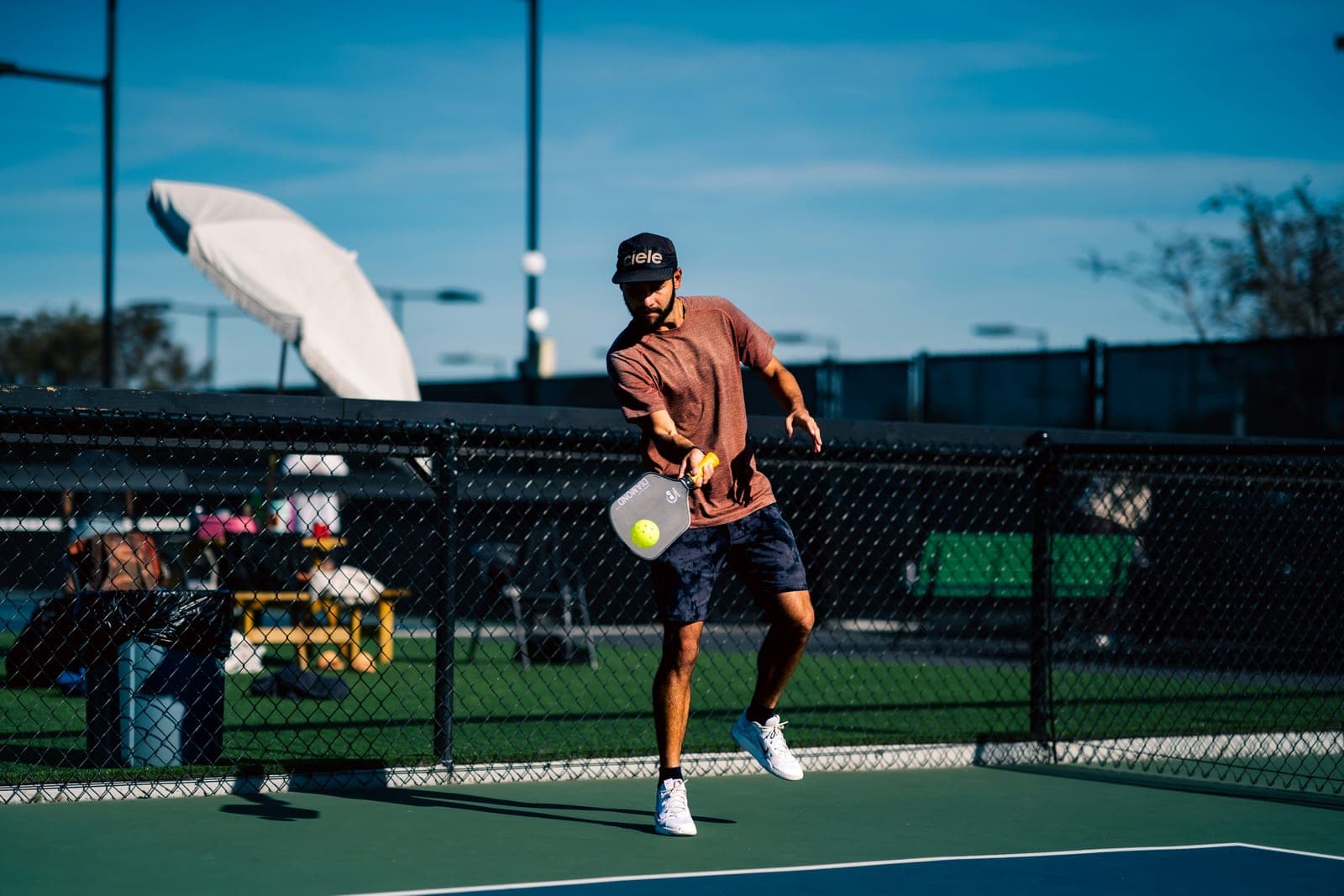
Playing padel in the UK and tracking the sport's explosive growth.
Last Updated: March 2026
Free Download
4-Week Pickleball Improvement Plan
Focused drills, match targets, and game-day tactics to move up one rating level.
Plus the weekly newsletter. No spam, unsubscribe anytime.
Quick Summary
- The third shot drop is a soft, arcing shot hit by the serving team on the third ball of the rally — it lands in the opponents' kitchen and is the single most important transition shot in pickleball
- Mastering this shot solves the serving team's biggest problem — getting from the baseline to the kitchen line without giving opponents an easy put-away
- Technique centres on a smooth lifting motion with a relaxed grip, open paddle face, bent knees, and a follow-through that guides the ball into the non-volley zone
- Find courts near you — use the RacketRise Court Finder to locate pickleball and padel courts across the UK
Every competitive pickleball point follows the same structural challenge: the serving team starts at the baseline, the returning team starts with a player already at the kitchen line, and the serving team needs a way to close that gap. The third shot drop is how you close it. Without this shot, you are stuck behind the baseline while your opponents control the net.
With pickleball growing rapidly across the UK — now with 55,000+ players and 449+ registered venues according to Pickleball England — more players are moving beyond casual rallies and looking to develop real tactical skills. The third shot drop is where that development starts.
Quick Answer: The third shot drop is a soft shot played by the serving team after the serve and return (shot number three in the rally). It arcs over the net and lands softly in the opponents' non-volley zone (kitchen), bouncing low. Because the ball lands in the kitchen, opponents must let it bounce and hit upward, buying the serving team time to advance to the net. The technique uses a gentle lifting motion with an open paddle face, relaxed grip (3-4 out of 10 pressure), and a smooth follow-through directed at the target.
Table of Contents
- What Is the Third Shot Drop?
- The Shot Sequence: Why the Third Shot Matters
- Third Shot Drop Technique: Step by Step
- When to Drop vs When to Drive
- Common Third Shot Drop Mistakes
- Practice Drills for the Third Shot Drop
- Advanced Variations and Tactics
- The Third Shot Drop in Doubles vs Singles
- How UK Players Can Develop This Shot
- Sources & Further Reading
- Related Articles
- Frequently Asked Questions
What Is the Third Shot Drop?
The third shot drop is a soft, controlled shot played by the serving team on the third ball of the rally. After the serve (shot one) and the return of serve (shot two), the serving team plays their third shot — and the drop is the most common and effective option. The ball arcs gently over the net and lands in the opponents' non-volley zone (NVZ), commonly called the kitchen, where it bounces low and takes pace off the rally.
The purpose is not to win the point outright. The purpose is to neutralise the returning team's positional advantage. Because the ball lands in the kitchen, your opponents cannot volley it aggressively — they must let it bounce and play it from a low contact point, hitting upward. That upward shot gives you time to move forward from the baseline toward the kitchen line.
Think of the third shot drop as the bridge between defence and offence. You start the point at a disadvantage (stuck at the baseline), the drop buys you time and space, and arriving at the kitchen line puts you in an equal or stronger position. Without a reliable drop, the serving team loses the majority of rallies at intermediate and advanced levels.
The shot is often compared to a golf chip shot — a smooth, controlled lift with an abbreviated backswing and a follow-through that guides the ball to a precise landing zone. It requires feel and repetition rather than power or athleticism.
The Shot Sequence: Why the Third Shot Matters
To understand why the third shot drop is so important, you need to understand the structure of a pickleball rally and the double bounce rule.
The Double Bounce Rule
In pickleball, the ball must bounce once on each side before either team can volley. The serve bounces on the receiving side (bounce one). The return bounces on the serving side (bounce two). After those two bounces, the ball can be volleyed or played off the bounce by either team. For a full explanation of pickleball rules, see our complete rules and scoring guide.
The Positional Problem
Here is the sequence that creates the serving team's challenge:
| Shot | Who Hits It | Where They Are | What Happens Next |
|---|---|---|---|
| 1. Serve | Serving team | Baseline | Must stay back (return must bounce) |
| 2. Return | Returning team | Baseline | Returner moves forward to kitchen line |
| 3. Third shot | Serving team | Baseline | Must find a way to advance forward |
After the return, the returning team has one player already at the kitchen line (the returner's partner, who starts there) and the returner advancing to join them. The serving team is stuck at the baseline because they had to let the return bounce. This positional gap is the central tactical problem in pickleball — and the third shot drop is the solution.
Why Not Just Drive It?
Beginners often try to hit a hard drive on the third shot, hoping to blast through the opponents at the net. The problem: a hard, flat ball travelling toward two players positioned at the kitchen line is relatively easy to block or counter-punch back. The ball reaches them quickly, but they are already in the best position on court to handle pace. A well-placed block sends the ball back at your feet while you are still at the baseline. The drive keeps you pinned back. The drop lets you move forward.
Third Shot Drop Technique: Step by Step
1. Grip
Use a continental grip — the same grip you would use to shake someone's hand with the paddle. This grip works for both forehand and backhand drops without needing to switch. Grip pressure should be light — about a 3 or 4 out of 10, where 10 is the tightest you can hold the paddle. A tight grip kills the soft touch you need.
2. Stance and Setup
Position your feet shoulder-width apart with your knees bent and weight slightly forward on the balls of your feet. Your body should be low and athletic. The lower you are, the better you can lift the ball with a smooth upward motion rather than scooping at it.
Face the direction you want to hit the ball. Your non-paddle foot should step slightly forward as you begin the swing — this weight transfer generates controlled forward momentum without adding power you do not want.
3. Backswing
The backswing is short and compact — roughly 30-45 centimetres. This is not a groundstroke. There is no big windup. Think of pulling the paddle back just enough to create a smooth pendulum motion. The backswing starts from roughly hip height and drops slightly below the intended contact point.
4. Swing Path
The swing path is the key to the entire shot. It moves in a low-to-high arc — the paddle drops below the ball, then lifts through contact and continues upward toward the target. Imagine the paddle tracing a gentle U-shape: down, forward, and up.
The motion is driven by the shoulder and arm, not the wrist. The wrist stays firm but not locked. Any wrist flick introduces inconsistency — sometimes the ball catches the net, sometimes it sails long.
5. Contact Point
Make contact with the ball out in front of your body, roughly in line with your front foot. The paddle face should be slightly open — angled upward by about 15-25 degrees. This open face combined with the low-to-high swing path creates the arc that lifts the ball over the net and drops it into the kitchen.
Contact the ball at or below waist height. If the return is high enough that you are contacting the ball above your waist, consider driving it instead — that is an attackable ball, not a drop opportunity.
6. Follow-Through
Let the paddle follow through naturally in the direction of your target. The follow-through goes forward and upward, finishing at roughly chest height with the paddle face pointing toward where you want the ball to land. A full, smooth follow-through is essential — cutting the follow-through short makes the shot choppy and inconsistent.
After the follow-through, immediately start moving forward toward the kitchen line. The whole point of the drop is to create time and space for you to advance. Do not admire your shot from the baseline.
7. The Arc
The ideal third shot drop clears the net by 30-60 centimetres and reaches its highest point (apex) over or just before the net. It then descends into the kitchen, landing roughly 1-2 metres past the net. If the apex is on your side of the net, the ball is descending as it crosses — this is what you want. If the apex is past the net, the ball is still rising when it reaches the opponents, making it easier to attack.
When to Drop vs When to Drive
The third shot drop is not the right play every time. The third shot drive — a hard, flat ball aimed at the opponents — has its place too. Knowing when to use each shot is a critical skill.
Drop When:
- The return is deep and low, keeping you behind the baseline
- Both opponents are established at the kitchen line
- You need time to advance forward
- The wind is calm (wind makes drops unpredictable)
- You have practised and trust your drop consistency
Drive When:
- The return is short or high, giving you an attackable ball above the waist
- One or both opponents are still transitioning forward and not yet at the kitchen line
- You want to apply pressure and keep opponents off-balance
- Conditions are windy and a soft drop is risky
- Your opponent has a weak volley that you can exploit
The Drop-Drive Mix
| Situation | Best Third Shot | Why |
|---|---|---|
| Deep return, both opponents at net | Drop | Need to neutralise their position |
| Short return, high bounce | Drive | Attackable ball — take the offence |
| Opponent at net has weak backhand | Drive (to backhand) | Exploit the weakness with pace |
| Windy conditions outdoors | Drive | Drops are unreliable in wind |
| You are well behind the baseline | Drop | Too far back to drive effectively |
| Opponent moving forward, not set | Drive (at feet) | Catch them mid-transition |
At intermediate level and above, the best players mix drops and drives on the third shot to keep opponents guessing. If you only ever drop, opponents sit back and wait. If you only ever drive, they set up to block. Variation is key.
Common Third Shot Drop Mistakes
Hitting the Ball Too Hard
The most common mistake by far. Players treat the drop like a groundstroke, using too much arm speed and sending the ball long or into the tape. The drop requires about 30-40% of your maximum swing speed. It is a touch shot. If the ball is landing beyond the kitchen line, you are swinging too hard.
Too Much Wrist
Wrist action is the enemy of consistency on this shot. Every millimetre of wrist flick changes the paddle angle at contact, producing wildly different results. Lock in the wrist and let the shoulder and arm do the work. Imagine your forearm and paddle are a single rigid unit that swings as one piece.
Standing Upright
If you are standing tall at contact, you will scoop under the ball and pop it up high — giving opponents an easy put-away. Bend your knees and get low. Your eyes should be closer to ball height. The lower your body, the smoother and more controlled the lifting motion becomes.
Not Moving Forward After the Drop
A technically perfect drop is wasted if you stay at the baseline. The drop buys you 1-2 seconds while the ball arcs over the net and bounces in the kitchen. Use that time to take 3-5 steps forward. The goal is to reach the transition zone (the middle of the court) or ideally the kitchen line before the opponents play their next shot.
Aiming Too Low Over the Net
Players who have been told "keep it low" sometimes aim so close to the net tape that they catch the net on half their attempts. A third shot drop should clear the net by 30-60 centimetres. It does not need to skim the tape. The softness of the shot and the fact that it lands in the kitchen are what make it effective — not net clearance alone.
Trying to Drop Every Third Shot
Not every third shot should be a drop. If the return sits up high and short, drive it. If conditions are windy and your drop is unreliable that day, drive more. Forcing a drop on an attackable ball is a wasted opportunity. Read the return and choose your shot.
Free Download
4-Week Pickleball Improvement Plan
Focused drills, match targets, and game-day tactics to move up one rating level.
Plus the weekly newsletter. No spam, unsubscribe anytime.
Practice Drills for the Third Shot Drop
The Progressive Distance Drill (Solo or Partner)
Start at the kitchen line with a partner feeding balls from the opposite kitchen line. Drop the ball softly into their kitchen. After 10 successful drops, take one step back. After another 10, step back again. Continue until you reach the baseline. This builds feel and consistency from short range before adding the challenge of distance. It is the single best drill for developing a third shot drop.
The Bucket Drill (Solo or Partner)
Place a bucket, cone, or towel in the middle of the opponent's kitchen — about 1.5 metres from the net. Stand at the baseline and hit third shot drops, trying to land the ball in or near the target. Track your success rate out of 20 attempts. Beginners might hit 3-5 out of 20 on target. Intermediate players aim for 10-12. Advanced players should hit 15+.
The Serve-Return-Drop Sequence (Three Players)
Simulate the real rally sequence. Player A serves, Player B returns deep, Player A hits a third shot drop. Reset and repeat. This drill adds the timing and footwork demands of a real point — you must split-step after the serve, read the return, and transition into the drop motion. Repetition here builds match-ready habits.
The Live Drop Game (Four Players)
Play normal doubles, but keep score only on the serving team's third shot. If the drop lands in the kitchen, the serving team gets a point. If it does not, the returning team gets a point. Play to 11. This adds competitive pressure and teaches you to execute the drop when it matters.
The Transition Drill (Partner)
Hit a third shot drop from the baseline, then immediately sprint forward to the transition zone (mid-court). Your partner feeds the next ball at your feet. You hit a reset — another soft shot into the kitchen — and continue forward to the kitchen line. This two-shot sequence (drop, then reset) is how the best players advance to the net in real play.
Advanced Variations and Tactics
The Topspin Drop
Instead of a flat or slightly backspin drop, brush up the back of the ball to add topspin. The ball still arcs over the net and drops into the kitchen, but topspin makes it dip faster after the apex, bounce lower, and kick forward. This gives opponents less time to react and makes the ball harder to lift on the next shot. The topspin drop requires a slightly more wrist-active swing and takes significant practice to control.
The Cross-Court Drop
Most players default to dropping straight ahead, but the cross-court drop is often a better option. The net is lower in the centre (86 cm vs 91 cm at the posts), giving you more clearance. The diagonal distance is longer, providing more margin for error on depth. Cross-court drops also pull one opponent wide, creating space on the court.
The Fake Drive, Hit Drop
Set up as if you are going to drive the ball hard — load your body weight, take a slightly bigger backswing — then at the last moment, soften the swing and hit a drop. This change of pace catches opponents who are bracing for a hard ball. They lean back to prepare for the drive and are slow to react when the soft drop lands at their feet.
The Deep Kitchen Drop
Not all drops should land just past the net. A drop that lands near the back of the kitchen (close to the kitchen line) forces opponents to stretch forward and hit from a more difficult position. The deeper drop is riskier — if it lands just past the kitchen line, it is attackable — but when executed well, it is harder to handle than a short drop.
The Fifth Shot Drop
The third shot drop gets all the attention, but the fifth shot drop is equally important. If your third shot drop is not perfect and opponents send the ball back to you while you are in the transition zone, you play another drop on the fifth shot. And if needed, a seventh shot drop. You keep dropping until you reach the kitchen line. Patience is everything.
The Third Shot Drop in Doubles vs Singles
Doubles
In doubles, the third shot drop is essential. Your opponents have two players at or near the kitchen line, covering the full width of the court. A hard drive into two set players is low percentage. The drop neutralises their positioning and gives both you and your partner time to advance together. For more on how the drop fits into overall doubles tactics, see our pickleball doubles strategy guide.
Communication with your partner matters on the third shot. If you are the one hitting the drop, your partner should advance with you — not stay back. Both players need to move forward in unison. If your drop is good, both of you should reach the transition zone. If it is great, you might reach the kitchen line in one move.
Singles
In singles, the third shot drop is still valuable but less dominant. With only one opponent at the net, there is more open court to drive into. Many singles players use a mix of drives and drops on the third shot, choosing based on the return they receive. A drop is particularly effective in singles when your opponent has positioned themselves at the kitchen line and you need to move them forward off the line with a low, soft ball.
The footwork demands are greater in singles because you must cover the full court width alone after hitting the drop. You cannot afford to hit the drop and jog forward casually — you need to sprint to the kitchen line while reading the opponent's next shot.
How UK Players Can Develop This Shot
Pickleball infrastructure in the UK is growing fast. With 449+ registered venues and 55,000+ active players across England, Scotland, and Wales, there are more opportunities than ever to practise and compete. Here is how to develop your third shot drop within the UK pickleball community.
Find Coaching and Sessions
Pickleball England runs coaching programmes and certifies coaches across the country. Many clubs offer beginner and intermediate sessions where coaches specifically work on the third shot drop. Look for drill-based sessions rather than open play — structured practice builds technique faster than just playing games.
Join Club Sessions
Most UK pickleball clubs run regular sessions at leisure centres, sports halls, and outdoor courts. The social format means you will play with partners of varying levels, which forces you to use the third shot drop in different situations. Playing against stronger opponents who punish weak drops is the fastest way to improve.
Use the Transition Zone
UK indoor venues often have limited court space, and many sessions are busy. Use warm-up time productively. Grab a partner and run the progressive distance drill before the session starts. Even 10 minutes of focused drop practice is more valuable than 10 minutes of casual rallying.
Practise Outdoors When Possible
If you have access to outdoor courts — and more are being installed across the UK — practise your drop in wind. Wind is the biggest variable that affects drops, and UK weather provides plenty of it. Learning to adjust your arc and pace in a breeze will make your indoor drops feel effortless by comparison.
Ready to practise? Use the RacketRise Court Finder to find pickleball courts near you — we list venues across the UK, from leisure centres to dedicated pickleball facilities.
Sources & Further Reading
- Pickleball England — Coaching and development resources — Official UK coaching guidance, club listings, and player development pathways
- USA Pickleball — Rules and technique resources — Comprehensive rulebook and shot technique guides
- The Dink — Strategy and technique articles — In-depth pickleball strategy, shot breakdowns, and pro analysis
- Pickleball Kitchen — Third shot drop tutorials — Detailed guides on the third shot drop and transition play
Frequently Asked Questions
What is the third shot drop in pickleball?
The third shot drop is a soft, controlled shot played by the serving team on the third ball of the rally (after the serve and return). It arcs gently over the net and lands in the opponents' non-volley zone (kitchen), bouncing low. The purpose is to neutralise the returning team's positional advantage at the kitchen line and give the serving team time to advance from the baseline toward the net.
Why is the third shot drop so important?
Because of the double bounce rule, the serving team starts every rally at a positional disadvantage — stuck at the baseline while the returning team controls the kitchen line. The drop is the most reliable way to transition forward. Without it, the serving team hits upward to opponents who can volley downward, which is a losing pattern. At intermediate and advanced levels, the team that controls the kitchen line wins the majority of points.
How do I stop hitting my third shot drop into the net?
Usually the problem is that your paddle face is not open enough or you are not getting low enough at contact. Bend your knees more, open the paddle face slightly (angle it upward 15-25 degrees), and focus on a smooth low-to-high swing path. Aim to clear the net by 30-60 centimetres — you do not need to skim the tape. Also check your grip pressure: a tight grip (7+ out of 10) restricts your touch and makes the shot harder to control.
Should I always drop on the third shot?
No. The third shot drop is the default play when both opponents are established at the kitchen line and the return is deep. But if the return is short and sits up high, drive it. If one opponent is still transitioning forward, a drive at their feet can be more effective than a drop. The best players mix drops and drives to keep opponents guessing. Read the situation and choose the right shot.
How long does it take to learn the third shot drop?
Most players can hit a decent third shot drop within 4-6 weeks of regular practice, but truly mastering it — hitting it consistently under match pressure from any position on the baseline — takes months of dedicated repetition. Use the progressive distance drill (start at the kitchen line and gradually move back) to build feel before adding distance. Even professional players miss third shot drops — the goal is consistency, not perfection.
What is the difference between a third shot drop and a dink?
Both are soft shots that land in the kitchen, but they are played from different positions and in different contexts. A dink is played from the kitchen line during a soft exchange at the net. A third shot drop is played from the baseline (or near it) as the third ball of the rally to transition forward. The mechanics are similar — open paddle face, relaxed grip, lifting motion — but the drop requires more arc and slightly more power to cover the longer distance. For a full breakdown of dinking technique, see our dinking guide.
Disclaimer: This article is for informational purposes only. Technique advice is based on widely accepted coaching principles — results may vary depending on skill level and playing conditions. Always warm up properly before playing and consult a professional coach if you have specific technique questions.
Free Download
4-Week Pickleball Improvement Plan
Focused drills, match targets, and game-day tactics to move up one rating level.
Plus the weekly newsletter. No spam, unsubscribe anytime.
Train Smarter
Pickleball Improver Training Plan
You can serve, dink and drop — this plan drills the decisions: the transition game, speed-ups, stacking and building the point. 12 scored sessions.
See the plan — print-ready PDF, £14.99→Tools & Quizzes
Ready to play? Find a pickleball court near you — 1,600+ UK venues with booking links.
New term? Look it up in the Pickleball Glossary.